 soulfully.maria
You can be growing even when nobody else can see it, self-expression and personal growth happens and you can make it intentional.
It might look like closing the notebook before you start picking apart every sentence. Pausing before you say yes to something you don’t have the time or energy for. Letting an idea belong to you for a little while before asking whether it’s good enough to share.
These moments don’t always look like progress from the outside. There may be no finished artwork, new offer, or post to point to. And when you’re a creative woman with a personal brand, it’s easy to measure your growth by what you publish and how people respond.
Yet some of the most important work happens before anyone sees the work.
It happens when you begin to hear your own preferences beneath the noise of other people’s opinions. When you notice that you’re scared of wasting your time, and choose one small, honest experiment anyway. When you let your expression be yours before it has to perform.
That counts.
Growth isn’t always something you can show
Personal growth can sound like a visible transformation: a bold new identity, a perfectly clear direction, a confident voice that never wavers.
Real life is usually less tidy.
Sometimes growth is recognising that you’re overwhelmed before you turn that feeling into a verdict about your talent. Sometimes it’s knowing that you want to create, and also knowing you need a break. You can be proud of your work and still feel unsure about showing it.
Both things can be true.
This is especially important if you’re sensitive and thoughtful. You may notice every pause, every small shift in someone’s response, every detail you’d like to improve. That awareness can make creating feel exposing. It can also be part of your creative power: you care about meaning, tone and the experience your work creates.
The goal isn’t to stop caring. It’s to let your care help you make choices without asking it to protect you from every uncertain outcome.
Research into everyday creative activities has explored how creativity can support experiences like autonomy and competence, while also noting that creative expression can bring up a fear of judgment. In other words, making something can feel meaningful and vulnerable at the same time. That doesn’t mean you’re doing it wrong.
Read more about creative activity and well-being.
The work before you share the work
If you’re building a creative business, you might feel pressure to turn every idea into content, every insight into a lesson, and every private moment into something useful for your audience.
It makes sense to want your work to reach people. Visibility matters when you have something you want to share. And you don’t have to make your whole inner life public to be authentic.
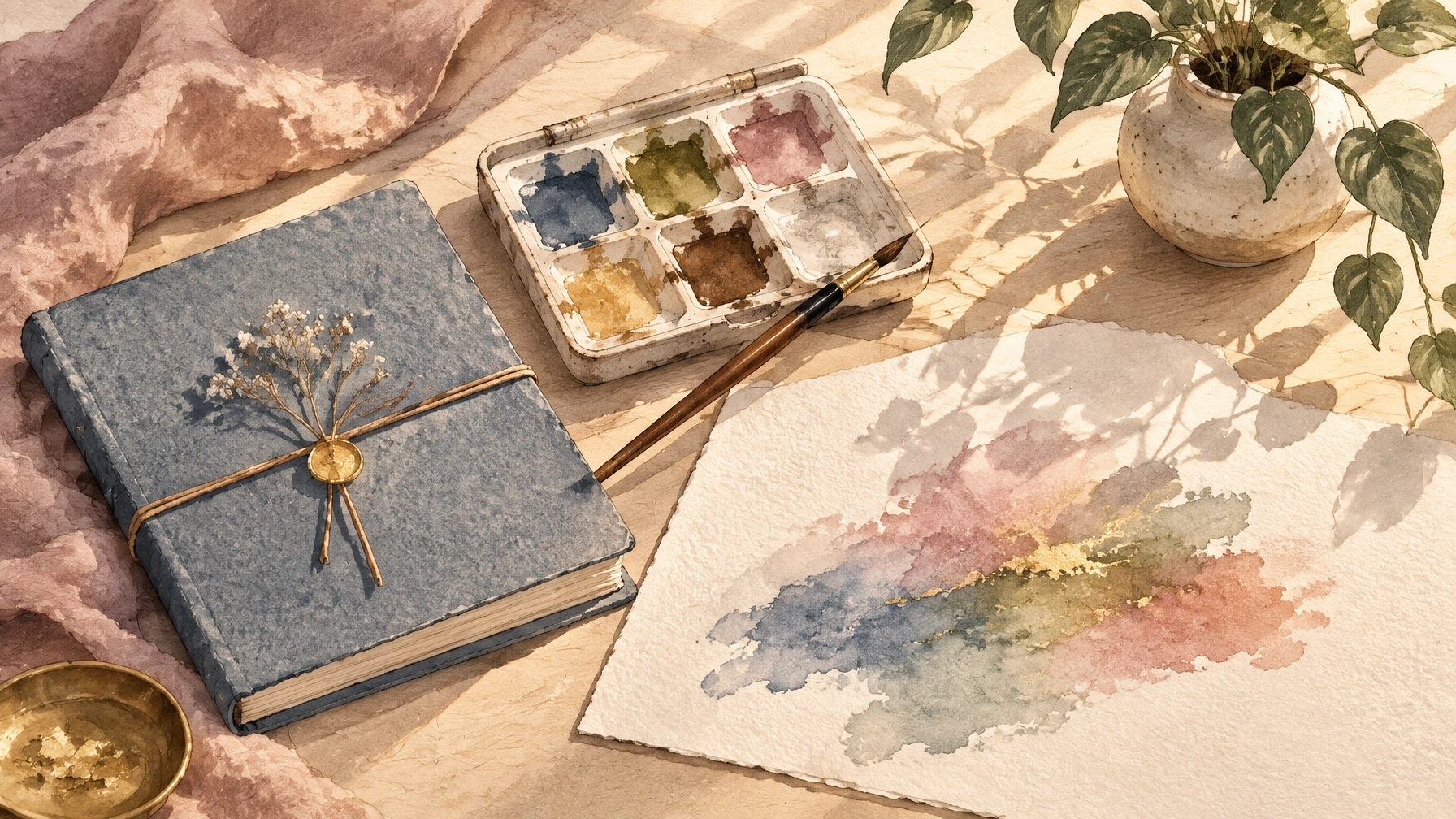
Self-expression can begin in private. A rough sketch. A voice note you never post. A sentence in your journal that tells the truth more clearly than the polished version you were trying to write.
That private space isn’t wasted time. It can help you work out what you actually think and want, without immediately weighing it against likes, sales, or someone else’s version of success.
If a creative block has made you question your ability, it may help to get curious about what the block is asking you to notice. Are you exhausted? Unsure what you want to say? Trying to make the first attempt carry the weight of your whole future?
You don’t have to solve the whole thing today. One small experiment could be making something for ten minutes without deciding whether it’s worth sharing. You can change the experiment, make it smaller, or skip it altogether.
For more on the tension between creative work and uncertainty, you might also like Am I Wasting My Time?.
Self-trust grows through small honest choices
Self-trust isn’t the same as knowing that everything will work out. It’s not a promise that you’ll never doubt yourself or make a choice you later change.
It’s the growing sense that you can listen to yourself, make a decision with the information you have, and respond to what happens next.
For a creator, that might look like choosing the idea you’re most curious about instead of waiting for the idea guaranteed to succeed. It might mean sharing a piece of work before it feels completely finished. Or deciding not to post today because you need to tend to something else.
Each choice can be small. It doesn’t need to prove your confidence. It can simply reflect what feels honest and possible right now.
A useful reflection, if you feel like it: What would I choose here if I didn’t need this decision to prove that I’m talented, consistent, or on the right path?
You can let the question sit without forcing an answer. Sometimes noticing what you feel is enough for this moment.

Boundaries make room for expression
It can be hard to protect time for your work when you’re used to being available, accommodating, or quick to say yes. You may worry that a boundary will disappoint someone, make you seem difficult, or close a door you might need later.
And yet, the time and attention you give away still come from somewhere. If you have nothing left for your own creative life, that matters too.
Learning how to set boundaries doesn’t require you to become harsh or unavailable. It can begin with a pause before you commit. A little room to ask: Do I have the capacity for this? Do I want to say yes, or am I afraid of what happens if I don’t?
Then you can choose a response that fits. Perhaps it’s a clear no. Perhaps it’s a smaller yes, with a realistic limit. Perhaps you need to think before answering.
A boundary is not a judgment of someone else. It’s information about what you can offer while staying connected to yourself. That can protect the conditions your creativity needs, not because you must be productive at all times, but because your own attention and energy matter.
If this is a tender area for you, you may find it helpful to read more about creative block and setting boundaries.
Journal prompts for self discovery, without turning it into homework
Writing can help you notice what’s happening beneath the familiar “I should be doing more.” If journal prompts for self discovery feel supportive today, try choosing just one:
- What kind of expression feels most like me lately?
- What am I doing because I want to, and what am I doing because I’m afraid to disappoint someone?
- What would feel meaningful to make, even if I didn’t share it immediately?
You don’t need a beautiful answer. You don’t need to finish the page. One honest sentence counts. If writing feels like another demand, leave it for another day.
You can also find more questions in these journal prompts for self-discovery.
Let the quiet work count
Maybe you’re in a season when the changes are subtle. You’re getting clearer about what you want. You’re learning not to abandon an idea the moment it feels uncertain. You’re beginning to notice that your work can matter to you before it has an audience.
That is not nothing.
You don’t need to become louder, more polished, or less sensitive to grow. You can return to your own voice, one choice at a time. You can make something imperfectly, keep some things private, and let your next step be small enough to feel doable.
If this has named something you’ve been carrying, you can stay close here. You’ll receive a short soul-letter most weeks, along with the free Authentic Expression Starter Kit, a first small piece of evidence that you can trust yourself.
You’re also welcome to subscribe on the site whenever it feels right.