 soulfully.maria
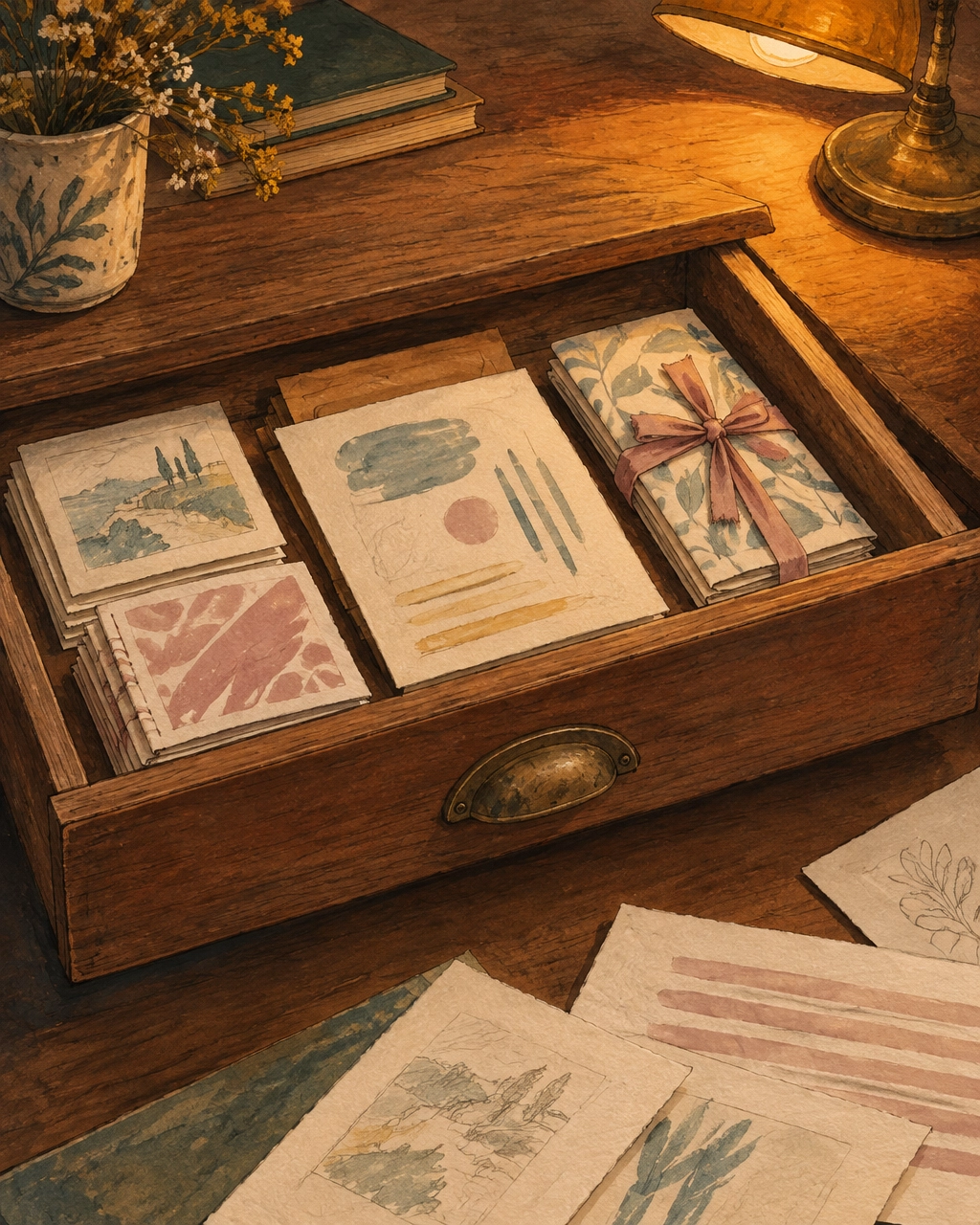
There may be a little graveyard of almost-finished things somewhere in your home,
your studio, or the folders on your computer…
that’s because finishing small things is quite under-rated.
– A story with one last chapter to write.
– A sketch that needs a few final lines.
– A design you were close to sending.
– A small creative project you meant to finish when you had more time, energy, or certainty.
If that sounds familiar, you are not lazy or lacking commitment.
You may be carrying work that matters to you, and the pressure of what it might mean to finish it. Starting can feel hopeful. Finishing can feel exposing.
And when you’re a deep-feeling creative woman, that difference matters.
Why starting can feel safer than finishing
At the beginning, everything is still possible. Your idea can be beautiful in your imagination. No one has seen it yet, and nothing has to be decided.
Then the work gets close to done.
Now you have to choose the final words, export the image, print the pages, or press publish. Even if nobody else sees it, you have to meet the result yourself. You might notice what could be better. You might wonder whether it was worth the time.
And there’s the fear underneath: If my work doesn’t land, maybe I’m wasting my time.
So you adjust one more detail. You start researching a new approach. You open a fresh project because that first rush of possibility feels easier than the complicated last stretch.
This isn’t a character flaw. It can be a way of protecting something tender: your hope, your creative identity, or the belief that the work you’re making matters. Sometimes what looks like a creative block is also a pause at the point where possibility turns into a real thing you can evaluate.
The quiet cost of almost-finished work
One unfinished project doesn’t tell the whole story of who you are. Life happens. Energy changes. Some ideas genuinely need to be set aside.
Still, when a number of meaningful projects remain suspended, it can start to feel like a pattern. You see the sketchbook, the draft, or the folder, and hear an old question: Can I trust myself to follow through?
The work itself may be small. The meaning you attach to it can become much bigger.
This is where self-trust can wear down, not because you have failed, but because your attention keeps landing on promises you remember making and haven’t yet closed. You may begin to hesitate before starting anything new. Not because you’ve lost your ideas, but because you don’t want to add another unfinished thing to the pile.
There is a way back that doesn’t require a grand declaration or a perfect routine.
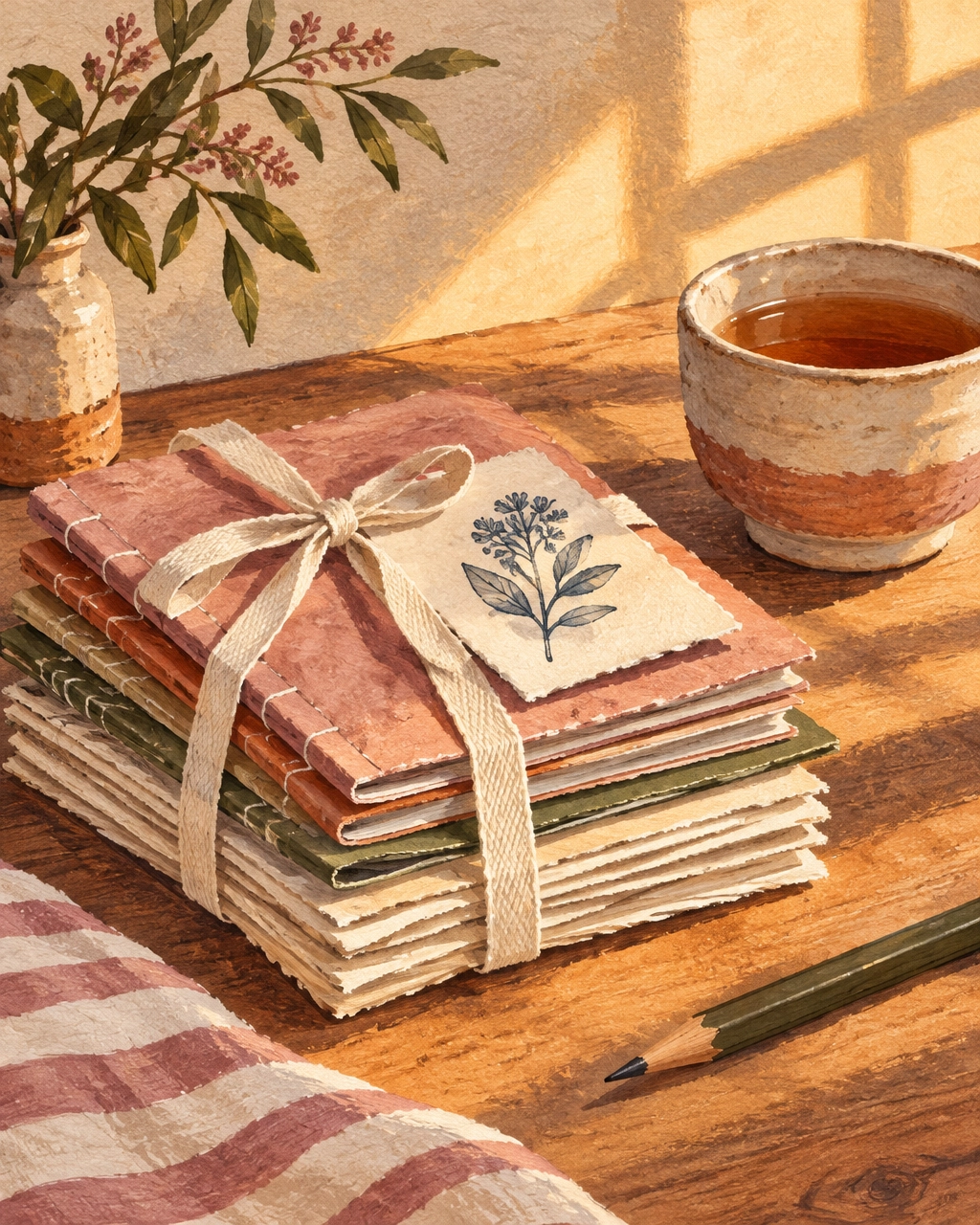
It can begin with finishing one small thing.
Finishing small is a self-trust practice
Self-trust isn’t built only through big leaps or dramatic milestones. It grows when you make a promise that fits your actual life, then give yourself the experience of keeping it.
A finished page is evidence. A saved and named sketch is evidence. A final edit that you decide is enough is evidence.
Not evidence that every idea will succeed. Not proof that your work will be praised or that you’ll never struggle again. Evidence that you can bring a piece of your own work to a clear stopping point.
That kind of evidence matters because it belongs to you. You don’t have to wait for likes, sales, comments, or anyone else’s approval to know you finished something you cared about.
And completion doesn’t have to mean “perfect” or “ready for the world.” You could finish a private draft and keep it. You could make one small painting, take a photograph of it, and call it done. You could complete a page of a larger project without promising yourself the entire book by next month.
The finished thing can be modest. The trust you practise is real.
Try one small finishing session
If it feels useful, choose the smallest unfinished thing that still matters to you. Not the most important project of your life. The one with the clearest, kindest finish line.
Maybe it’s a paragraph. One sketch. The last edit on a short email to a client. One small piece of content you’ve already drafted.
Try giving it one 25-minute finishing session. Before you begin, decide what “done for now” means. For example: “I’ll add the final caption, save the image, and put it in the folder.”
Then use the session to move toward that ending, not to reopen every decision or redesign the whole project. If the finish line turns out to be too large, make it smaller. You can modify this experiment or skip it altogether. The point isn’t to meet a timer. It’s to choose a promise you can stand behind.
When you’re done, let yourself notice that you finished. No need to turn it into a productivity target or immediately demand the next thing from yourself.
Just register the moment.
I said I would finish this small piece, and I did.
Protecting the time it takes to finish
Finishing often needs a little protected space. Not a flawless schedule, just enough room for your attention to stay with the work.
If you’re wondering how to set boundaries around a finishing hour, begin with what tends to interrupt it. Is it one more request? The pull to check messages? The belief that your creative time is less important than everything else?
You might set a small boundary such as: “For the next 25 minutes, I’m finishing this page. I’ll reply after.” Or you might choose a time when you’re less likely to be pulled into other tasks and let one person know you’re unavailable.
A boundary doesn’t need to be harsh or complicated. It’s a way of treating your work as something that deserves a place in your life, not only the leftover minutes.
Three journal prompts for self-discovery
If you want to understand what finishing brings up for you, take one prompt into your journal. You don’t need to write beautifully or find a final answer. Let the first honest response be enough.
- What do I imagine will happen when I finish this piece of work?
- Which almost-finished project still feels meaningful to me, and what would “done for now” look like?
- When I finish something small, what do I want to remember about myself?
These journal prompts for self discovery are not a test of whether you’re ready. They’re a way to hear what completion means to you, in your own words.
If one of them opens something, you’re welcome to share a line or two in the comments. Reading how another person names it can be its own kind of company.
Your work deserves to be finished, not perfect
You don’t need to finish every idea you’ve ever had. Some projects can be released, reshaped, or left behind with care. And some are waiting for one clear decision, one final edit, or one small act of attention.
You are allowed to choose the small one.
You are allowed to finish it imperfectly, privately, or at your own pace. Each time you bring a piece of your work to a real ending, you give yourself something more useful than another ambitious plan: a lived experience of following through.
That is creative momentum. That is self-trust, built in a way you can feel.
If this has named something you’ve been carrying, I’d love to hear it in the comments, even one line. What’s the almost-finished thing you’d choose for your first small finishing session?
And if you want a gentle next step, the free Authentic Expression Starter Kit is there whenever you’d like it: a first small piece of evidence that you can trust yourself.