 soulfully.maria
You open your feed and see another artist’s new collection, a writer’s finished book, or a creative business sharing work that seems to be moving forward. Then you look at your own draft, still tucked away, and think: What’s the point? No one will see it anyway.
If you’re wondering how to stop comparing yourself to others, it may help to start here: you’re not comparing like with like. You’re looking at someone else’s visible work while your own work is still hidden. Their finished piece is in view. Yours is still living among the drafts, decisions and small steps no one else can see.
That gap can make your work feel pointless. It can make you question the time you’ve given it, even when you still care. And the more you scroll, the easier it is to treat other people’s progress as evidence that you should stop.
You don’t need to force yourself to feel inspired by them. You don’t need to compete. You need a way to notice your own work again, and begin creating evidence that it matters to you.
Why comparison feels so convincing when your work is hidden
Comparison is a normal way we make sense of where we are. And when you’re sensitive to what’s happening around you, you may notice every new launch, polished portfolio and announcement. Those details can quickly become a story about your own chances.
But that story leaves out important information. You may be comparing their finished, public result with your unfinished private process. You can’t see how many drafts they made, how long they practised, what help they had, or what they chose not to share. You only see what made it out into the world.
Meanwhile, your own attention is on everything that hasn’t happened yet. The page you haven’t finished. The offer you haven’t described. The work you haven’t shown anyone.
It makes sense that your work might feel smaller in that moment. It doesn’t mean the comparison has told you anything reliable about its value.
The phrase “What’s the point?” often carries another question beneath it: “Am I wasting my time?” If that doubt has been following you, you might find it helpful to read more about the fear of wasting time on creative work.
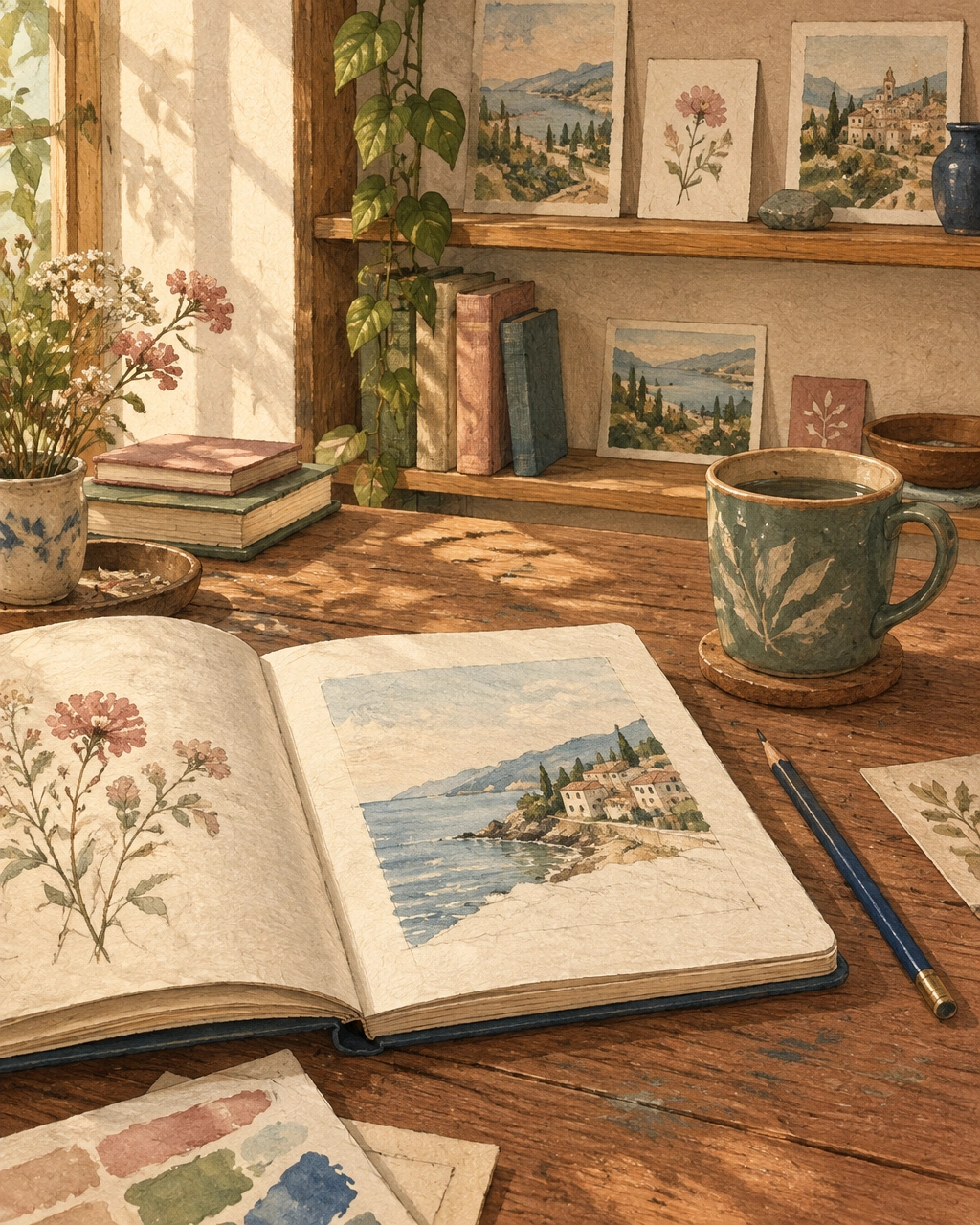
How to stop comparing yourself to others by building your own evidence
The answer isn’t to wait until comparison disappears. It may still show up when you see someone doing work you admire. The shift is to stop letting their visibility become the only evidence you use to judge your own creative life.
Start with what you can actually see in your own experience.
You had an idea. You returned to it. You made a page, a sketch, a sample or a draft. Maybe you haven’t shared it yet. That is still part of making. It is not proof that you are standing still.
Then choose one promise that is small enough to keep. Not “finish my whole collection” or “build a following.” Something you can complete in the time and energy you have: write one paragraph, finish one small piece, or decide what “done for now” means.
A kept promise won’t guarantee attention or applause. It gives you something more solid than a comparison: a moment when you can say, I said I would do this, and I did.
Small finishes count for the same reason. They show you that your work can move from idea to something real, without requiring you to transform your whole life first. If that feels useful, read about how finishing small things can rebuild self-trust.
You can also give your attention a kind boundary. If a particular scroll reliably sends you into a spiral of “What’s the point?”, try stepping away for a while. Not to punish yourself, and not because someone else’s success is wrong. Simply because you deserve room to hear your own thoughts and return to the work you care about.
Try one of these ideas as an experiment. Change it to fit your circumstances, or leave it for another time.
Your first step out doesn’t have to be a grand reveal
When your work has been hidden for a long time, the first step out can feel loaded. It may seem as though you have to announce everything, explain why it matters, and make sure the response is good enough to justify all the time you spent.
You don’t.
Your first step might be finishing a piece and letting one trusted person see it. It might be sharing a short extract, showing a small detail, or writing one clear sentence about what you make. You can decide what feels like a meaningful next step for you.
Visibility can be practised in ways that feel contained and doable. It doesn’t have to mean becoming louder or more polished. It can mean letting one piece of your work exist beyond your private folder, without asking it to prove your entire future.
And if sharing brings a wobble afterwards, that doesn’t mean you made a mistake. You can find some company in this piece about the spiral after you share.
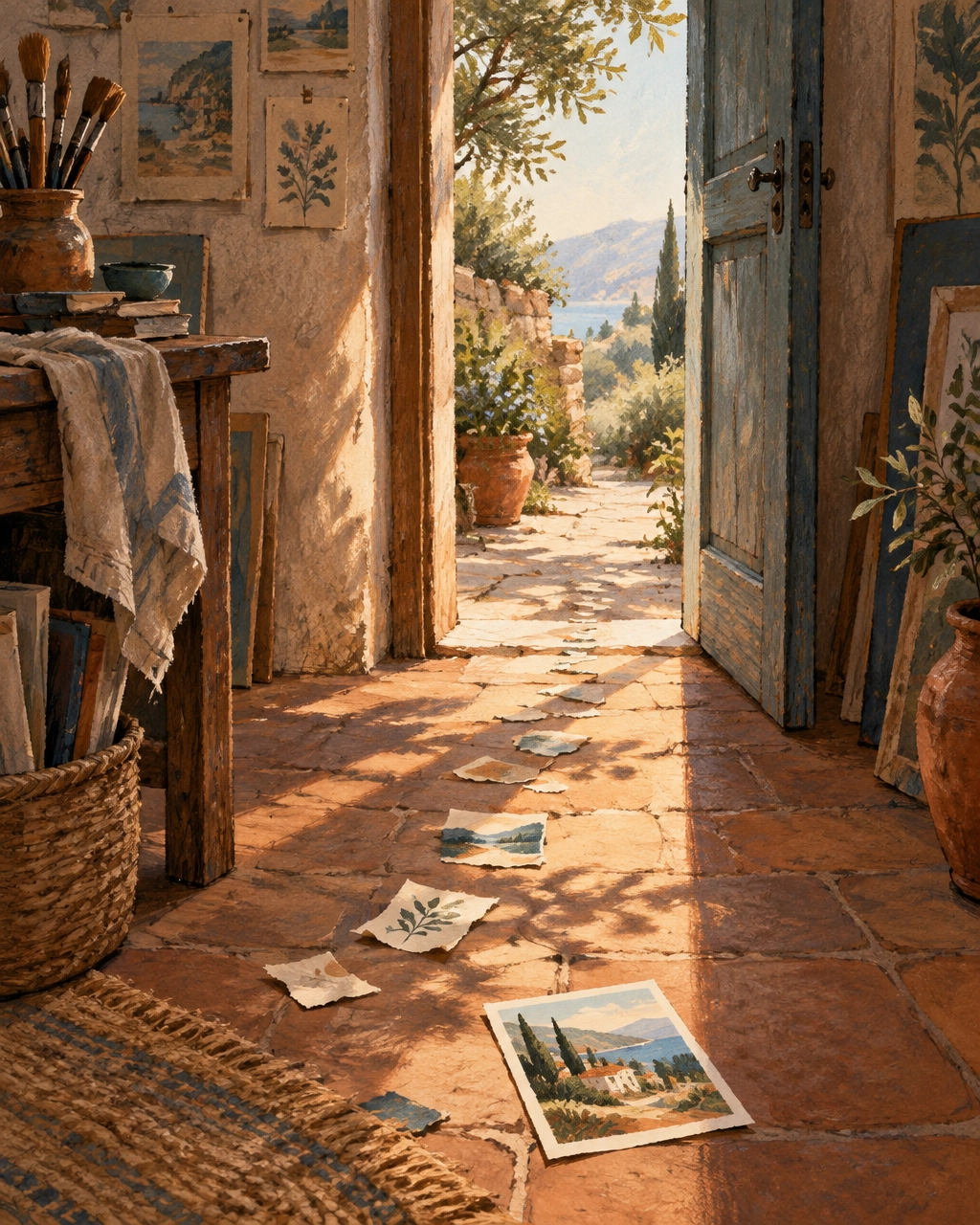
Sometimes the step out is also letting your words be clearer. You don’t have to wrap your work in disclaimers or explain away why you’re sharing it. If you tend to tuck your meaning inside extra caveats, you may recognise yourself in this reflection on why sensitive women soften their sentences.
The goal isn’t to make every part of you feel ready. It is to act with care for the part of you that has kept creating, even while wondering whether anyone would notice.
Your work is not pointless because it is not visible yet
Other people’s work can be meaningful to you without becoming a measure of your own progress. You can appreciate their finished piece and still return to yours.
Your work is allowed to be at an earlier stage. It is allowed to take time. And it is allowed to matter before anyone else has responded to it.
Each small finish, each promise kept and each real step out gives you evidence that your creative life is not only happening in your imagination. You are making choices. You are following through. You are bringing something of yours closer to the world.
That evidence won’t make every doubt vanish. It can give you somewhere steadier to stand when comparison arrives. Not someone else’s timeline. Your own lived experience of staying with what matters to you.
Journal prompts
Choose one prompt and write what’s true, without needing to make it sound wise or complete.
- What do I see someone else doing that I wish I could let myself do?
- What is one piece of evidence that I have already moved my own work forward?
- What small promise could I keep to my work this week?
- What would a first real step out look like if I didn’t have to make it impressive?
If this put words to something you’ve been carrying, you’re welcome to share it with a creative friend who might feel less alone reading it too.
What’s one small piece of your work you could finish this week?
Stay close here, and download the free Authentic Expression Starter Kit, a first small piece of evidence that you can trust yourself.